
Two Choices That Shape Every Gate
A gate is a material and a mechanism. The material decides how it looks, how much upkeep it needs and how it handles York's weather: humid summers, freezing nights in January, and road salt thrown up from the street. The mechanism, whether it swings, slides or folds, decides how much room it needs, how it copes with a slope and snow, and how easily it can be automated.
Neither is chosen on its own. A heavy steel swing gate on a long leaf needs strong posts and hinges; a wood gate on a wide drive is often better as a steel frame with a wood face; a sloped drive pushes you toward a cantilever slide gate whatever it is made of.
Gate Materials Compared
Lifespans depend on the finish, the exposure and the care. Cost is relative, for gates of the same size and style.
| Material | Durability | Maintenance | Lifespan | Cost | Best use |
|---|---|---|---|---|---|
| Steel | Very strong and hard to damage; rusts wherever the coating is broken | Moderate: touch up chips, watch the bottom rail and welds for rust from road salt | Decades, if rust is kept in check | Higher | Security, ornamental entrances, heavy wide gates |
| Aluminum | Does not rust; lighter than steel and dents more easily | Low: wash off salt, check fasteners and the finish | Long; the powder-coat finish is what ages | Moderate to higher | Ornamental gates, HOA styles, automated swing gates |
| Wood | Strong, but swells and shrinks with moisture; can warp or check | Highest: stain or seal every few years, keep the bottom clear of soil | Varies the most, with the species, the finish and the care | Moderate (cedar) to higher (hardwoods) | Privacy, traditional homes, matching wood fences |
| Vinyl | Will not rot or rust; can turn brittle in hard cold and flex on wide spans | Low: wash it; check the metal frame inside the gate | Long for the panels; hinges and frames wear first | Lower to moderate | Yard and walk gates matching vinyl fences |
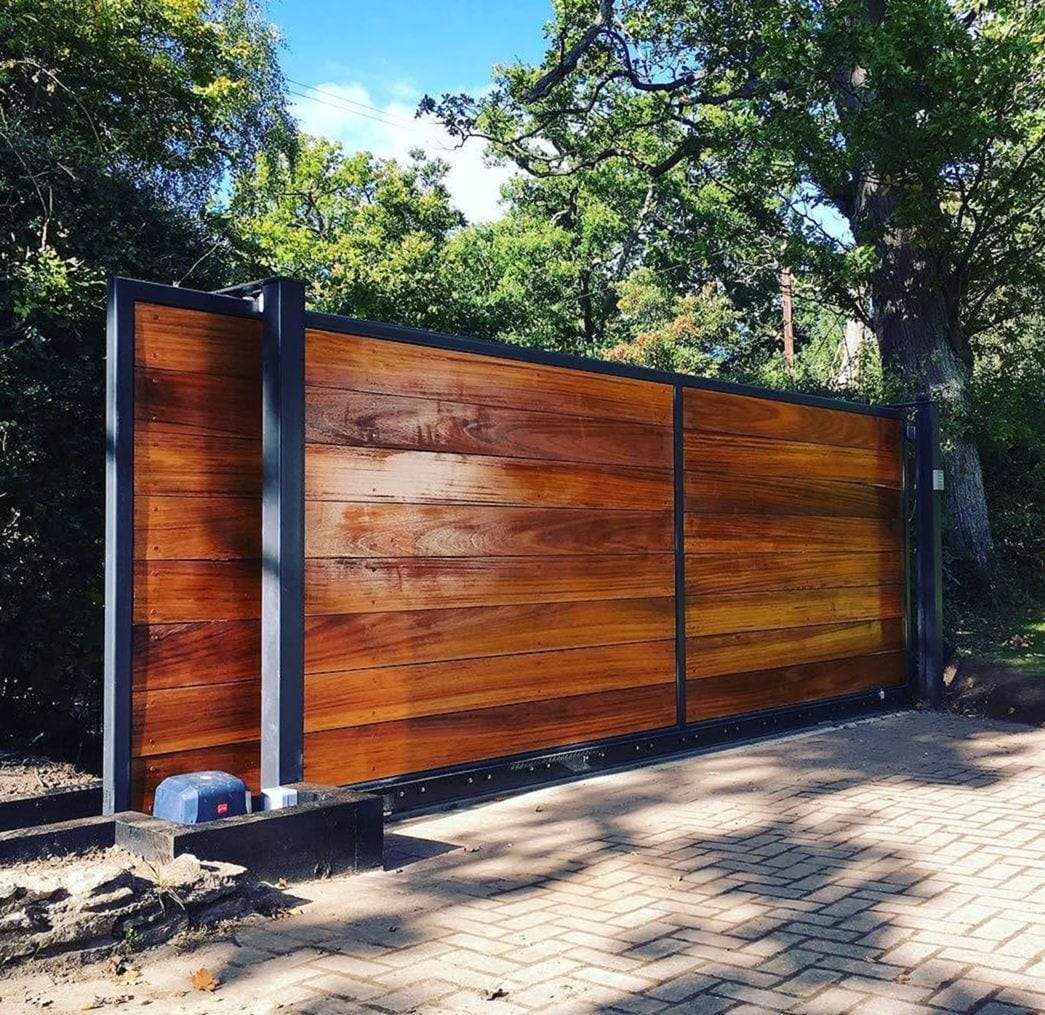
| Steel frame, wood face | The steel frame keeps the gate square; the wood gives the look | Moderate: the wood finish plus the frame coating | Long frame; boards can be replaced as they weather | Higher | Wide wood-look gates, especially automated slide gates |
Gate Mechanisms Compared
| Mechanism | Space needed | Automation-friendly | Maintenance | Best use |
|---|---|---|---|---|
| Single swing | A clear, level arc as wide as the leaf is long | Yes: arm, ram or underground openers | Hinges, latch, sag adjustment | Narrow to medium flat drives; walk gates |
| Double swing | A clear arc of half the opening on each side | Yes: one opener per leaf | Two sets of hinges; the leaves must stay in line | Wide, level drives and formal entrances |
| Track slide | A straight run beside the opening, slightly longer than the gate | Very: rack-and-pinion operators | Track kept clear of gravel, leaves, ice and snow; wheels | Wide, level drives; many commercial sites |
| Cantilever slide | About one and a half times the opening, beside it | Very: rack-and-pinion operators | Carriage rollers; no ground track to clear | Slopes, snow-prone sites, heavy traffic |
| Bi-fold | About half the arc of a swing gate | Yes, with openers made for folding leaves | More hinges and pivots to keep adjusted | Short drives where a car stops close to the gate |
Not sure which mechanism fits? The gate sizing guide suggests one from your drive's width, slope and the vehicles that use it.
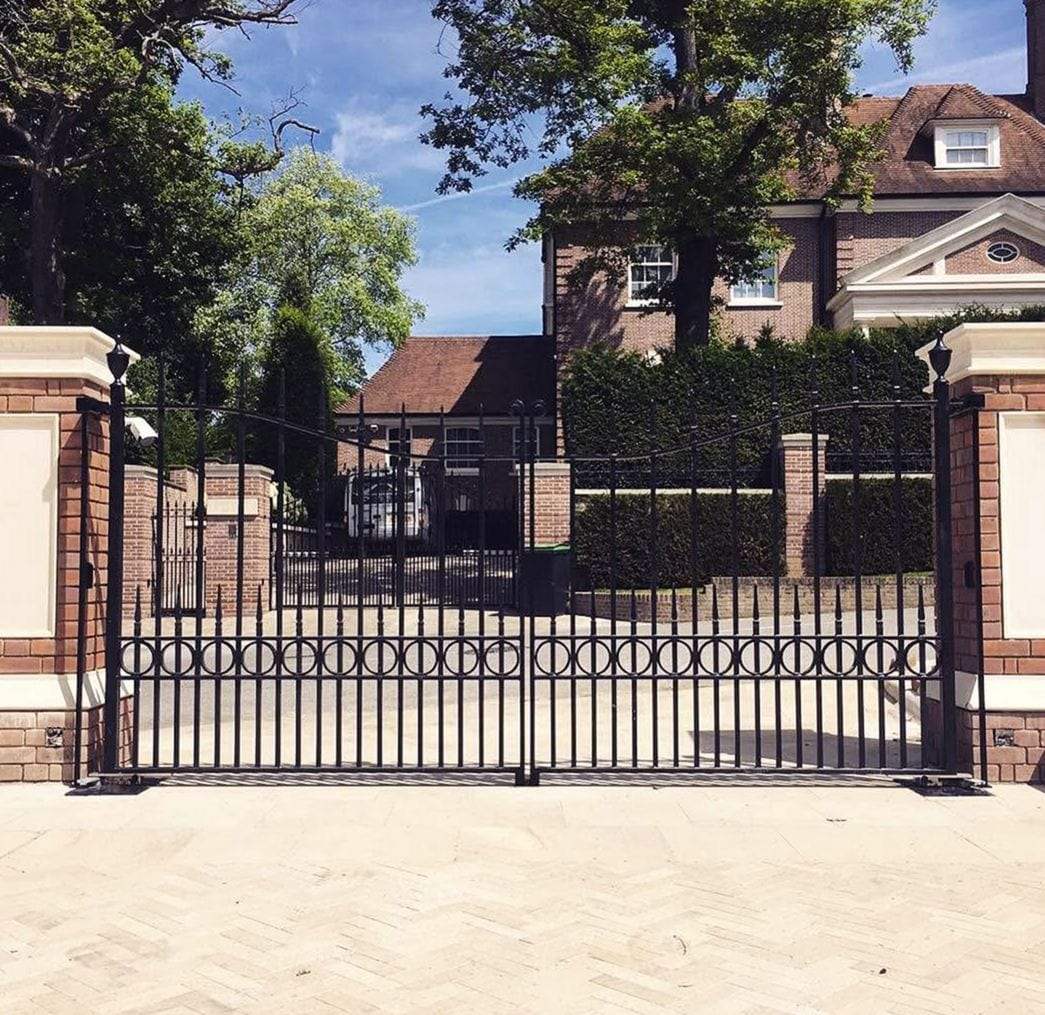
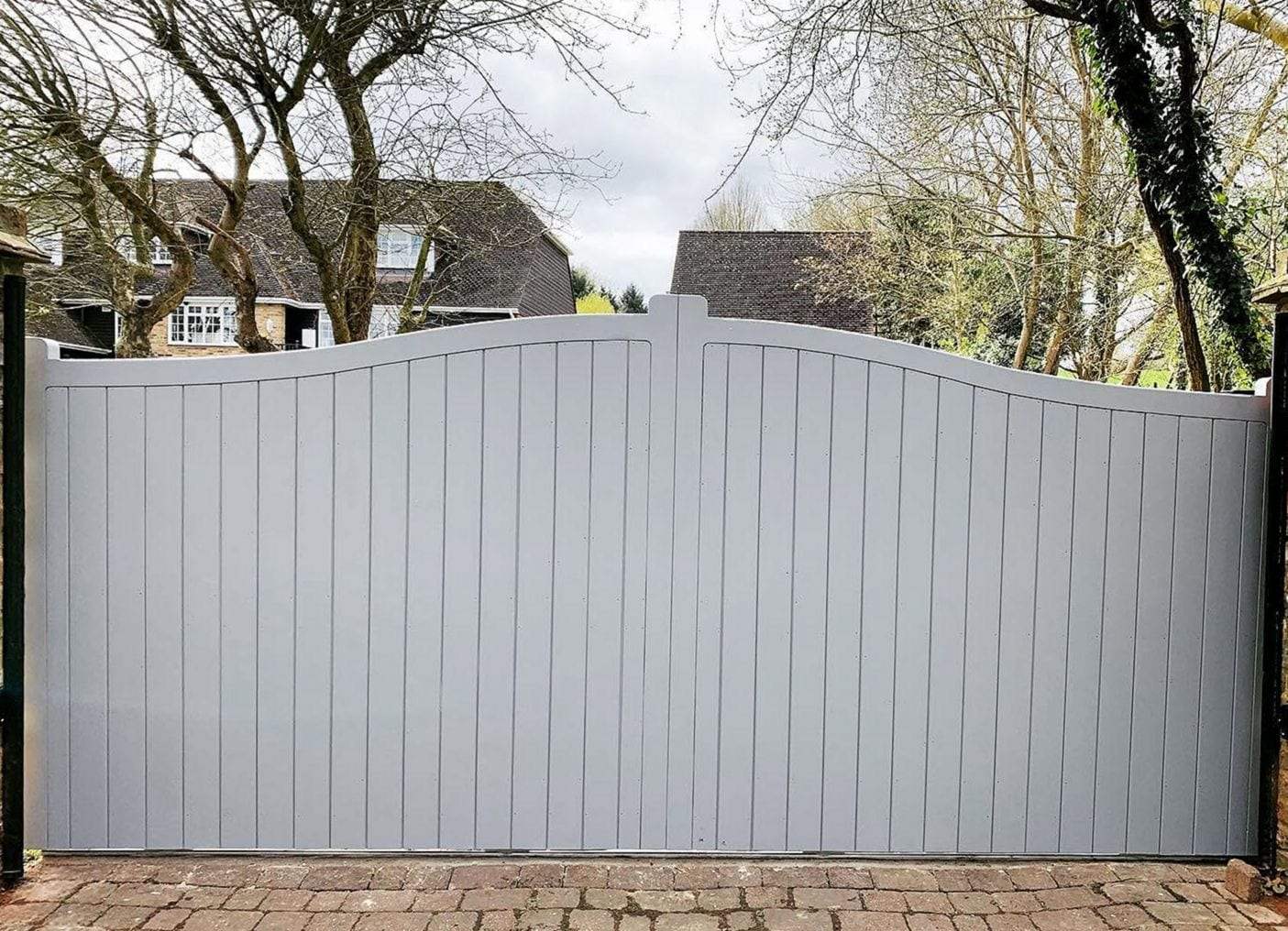
Gates by Material
Natural wood
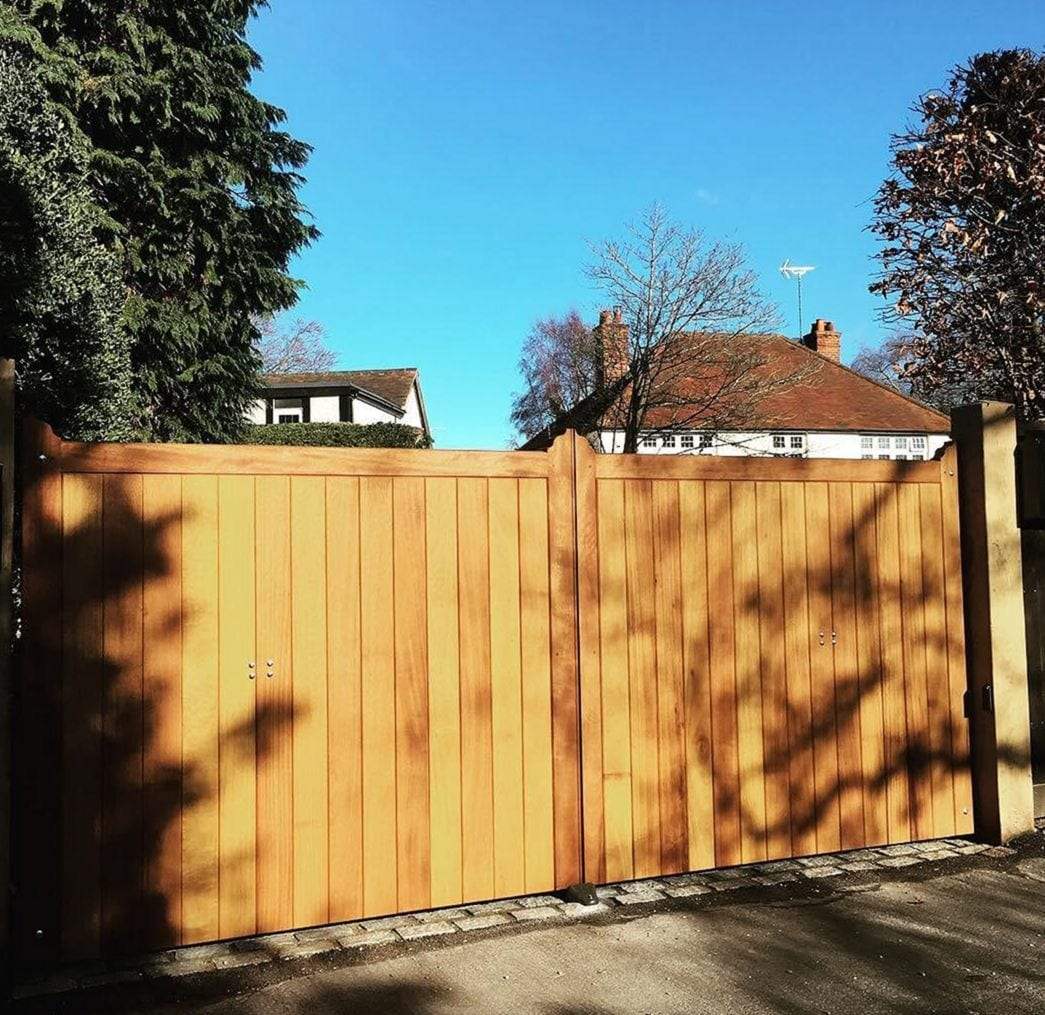
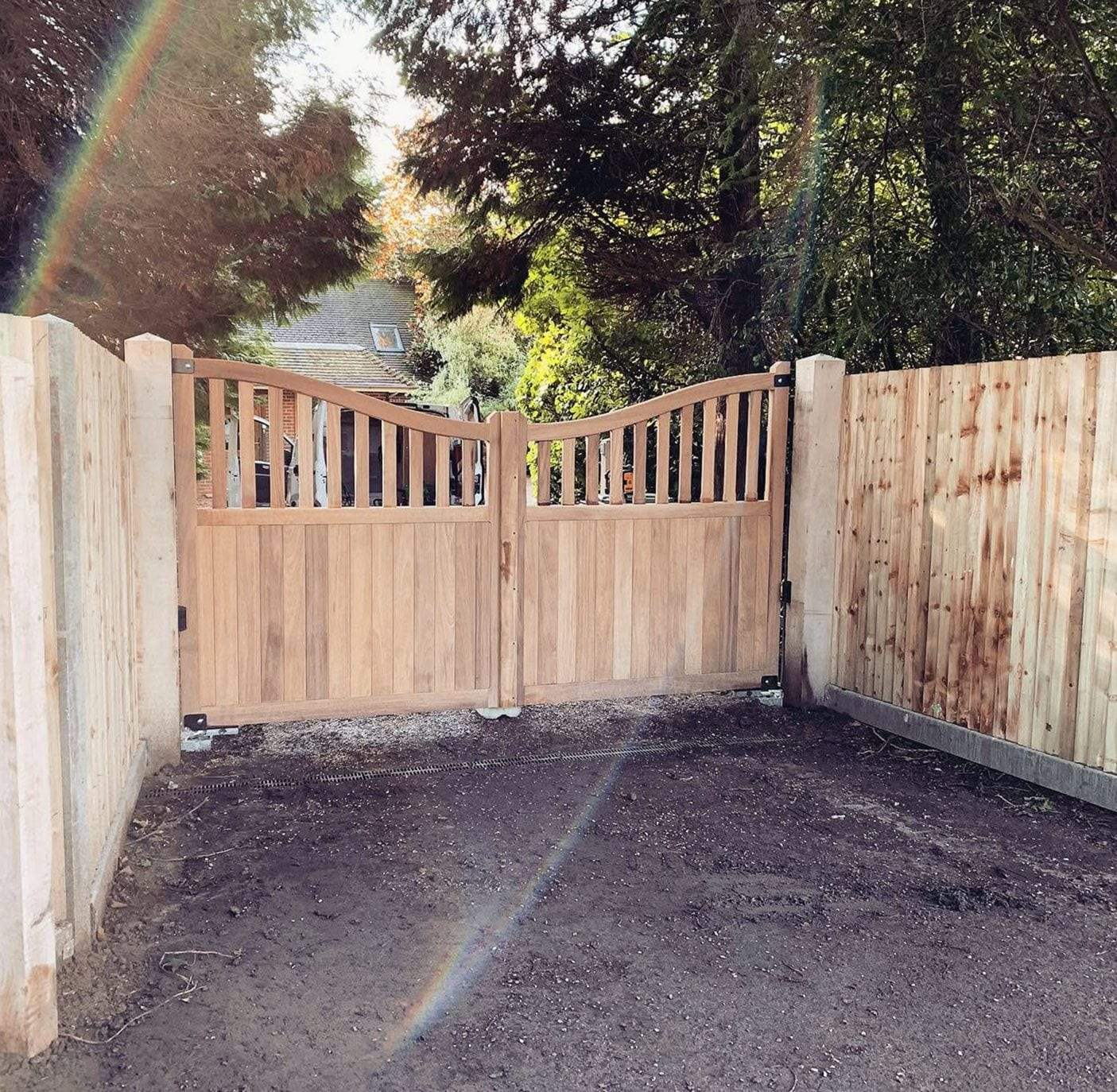
Steel frame with a wood face
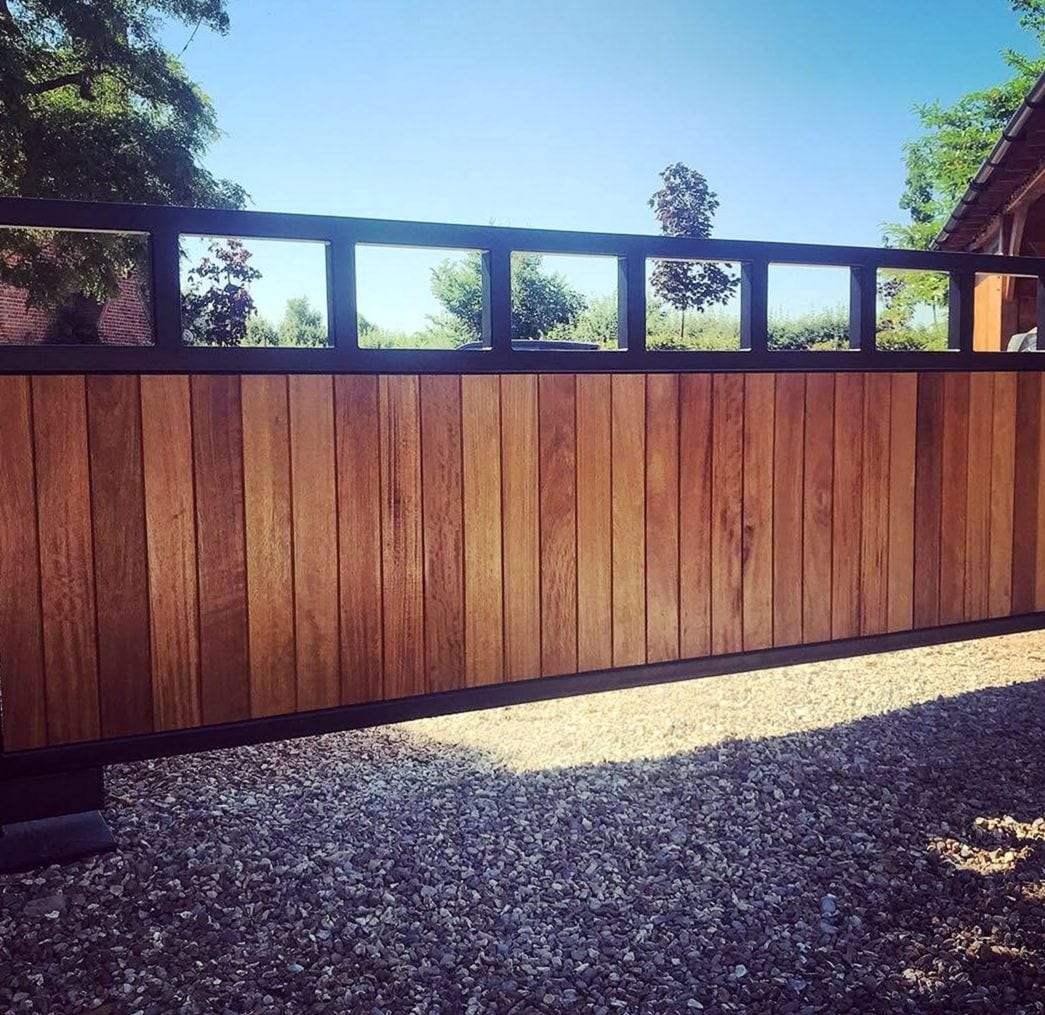
Painted metal and timber
Matching an Existing Fence
Most new gates join a fence that is already there. Matching it well comes down to the details: the same picket size and spacing, the same top style, the rail heights lining up, and a close color. Steel and aluminum are the easiest to match because profiles and finishes are standard. Wood and vinyl change with age, so a new gate stands out at first. Where the fence itself is near the end of its life, it may make sense to settle the new fence first, so the gate can be built to match it.
Materials Questions
Which material holds up best in humid PA summers?
Aluminum and vinyl shrug off humidity; neither rots nor rusts. Galvanized, powder-coated steel does well too, as long as the coating stays intact. Wood is the one that moves: York's humid summers and wet springs make boards swell, and dry winter air shrinks them again. A wood gate lasts best with a sealed finish on every face, including the end grain and the bottom edge, and with the bottom kept off the soil. A steel frame with a wood face gives the wood look without the warping.
Is aluminum or steel better for automation?
For most homes, aluminum. It is lighter, so the gate sags less, the opener works less hard and a smaller opener will do. Steel is the better choice where strength matters more: security fences, gates that may be hit, and wide commercial gates. A heavy steel gate automates perfectly well; the opener just has to be rated for its weight and length.
How do I match my existing fence material?
Start with the same material and the same details: picket size and spacing, rail height, the top style, and the color. Send a photo or let us see the fence on the first visit. With wood, new boards look brighter for a season until they weather or are stained to match; with vinyl, older fences may have faded, so a new gate can look whiter than the fence beside it.