
Choosing a New Gate
Three decisions shape every new gate: how it opens (it swings, slides or folds), what it is made of, and whether it opens by hand or on its own. The site usually settles the first one. A swing gate needs clear, level ground across the arc its leaves sweep. A slide gate needs a straight run along the fence beside the opening. A bi-fold gate needs about half the swing room of a regular swing gate.
York adds its own conditions. Many drives here climb or drop from the street, which rules out some gate types or calls for rising hinges. Our winters bring hard freezes, thaws and plowed snow, so posts and footings have to sit below the depth frost reaches, and tracks have to stay clear. Older city lots often have tight side yards between brick houses, while newer township properties tend to have wider drives and HOA rules about height and style.
Before any post hole is dug, Pennsylvania law requires a PA One Call (811) request at least three business days ahead so buried utility lines are marked. On our installs that is part of the job.
Gate Styles
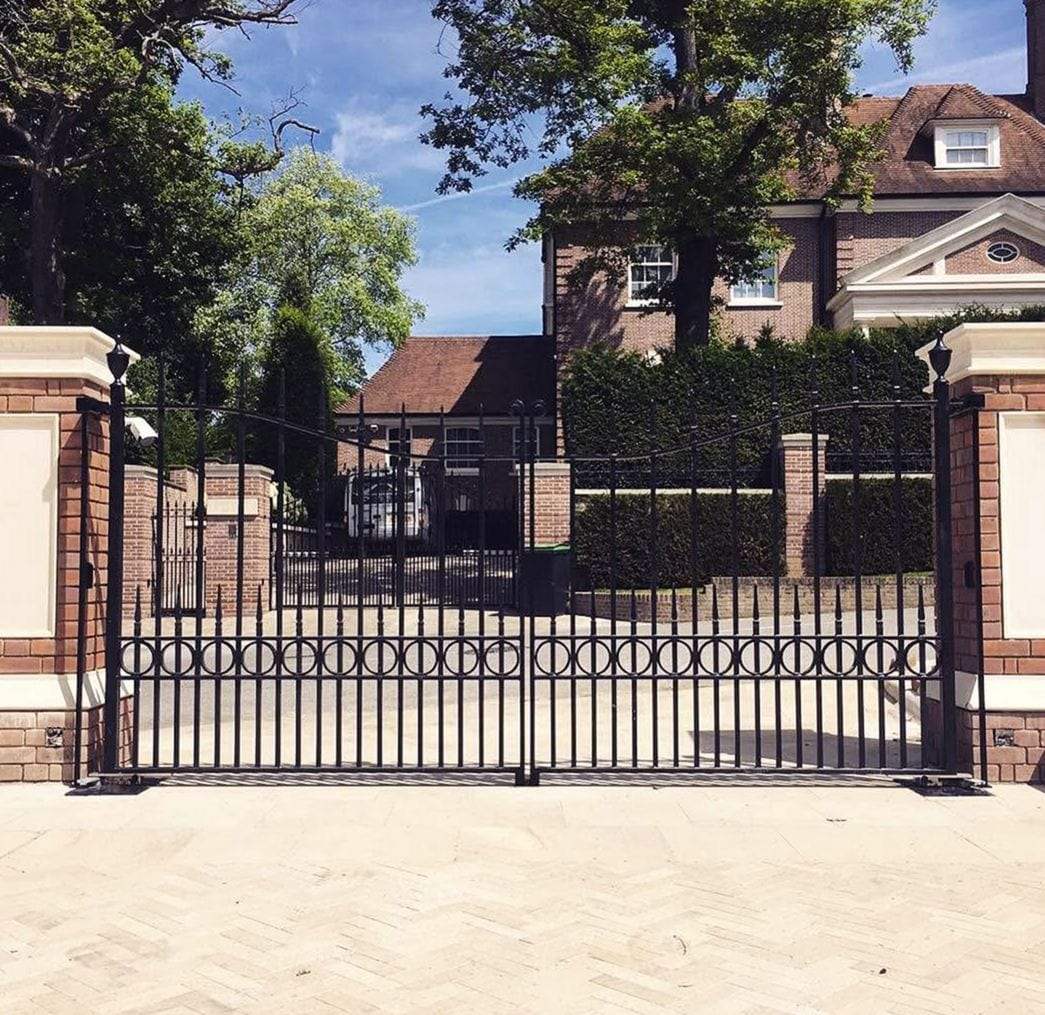
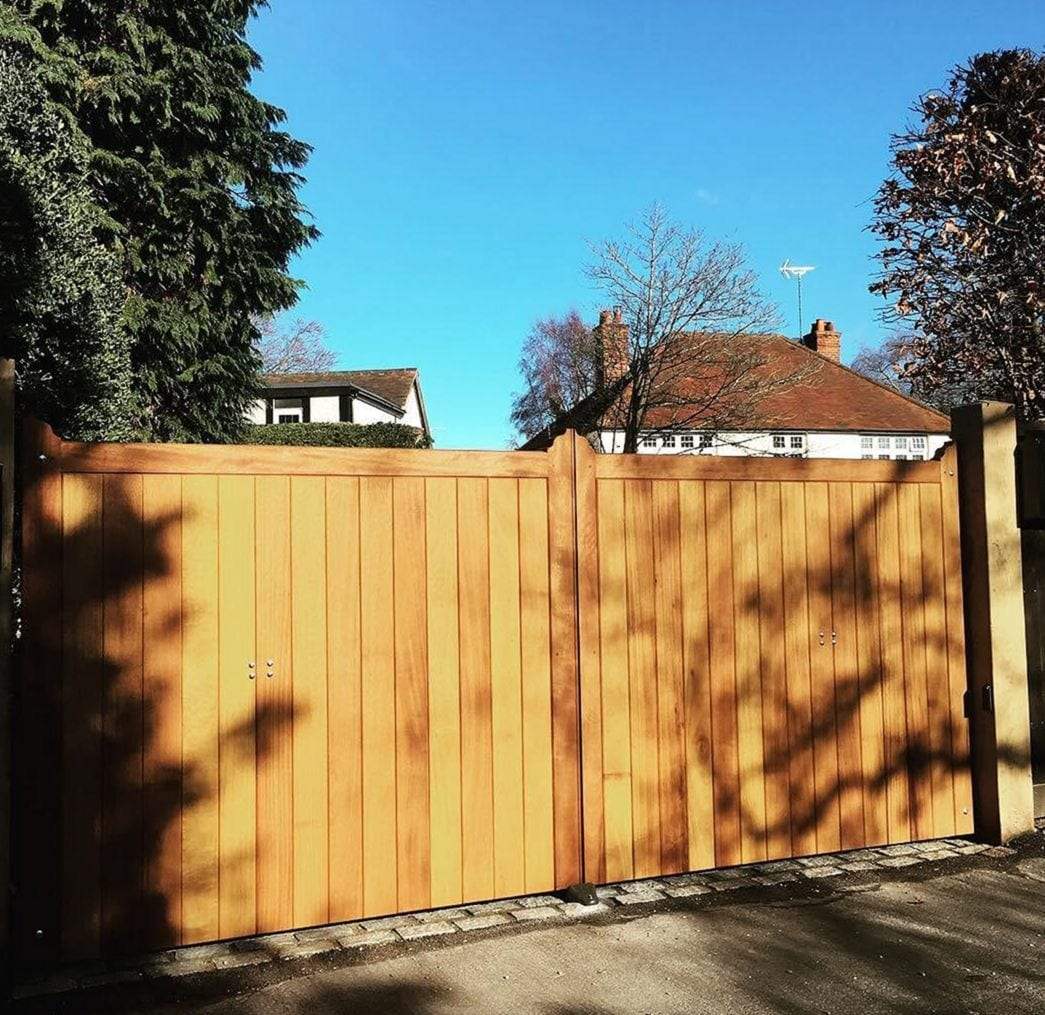
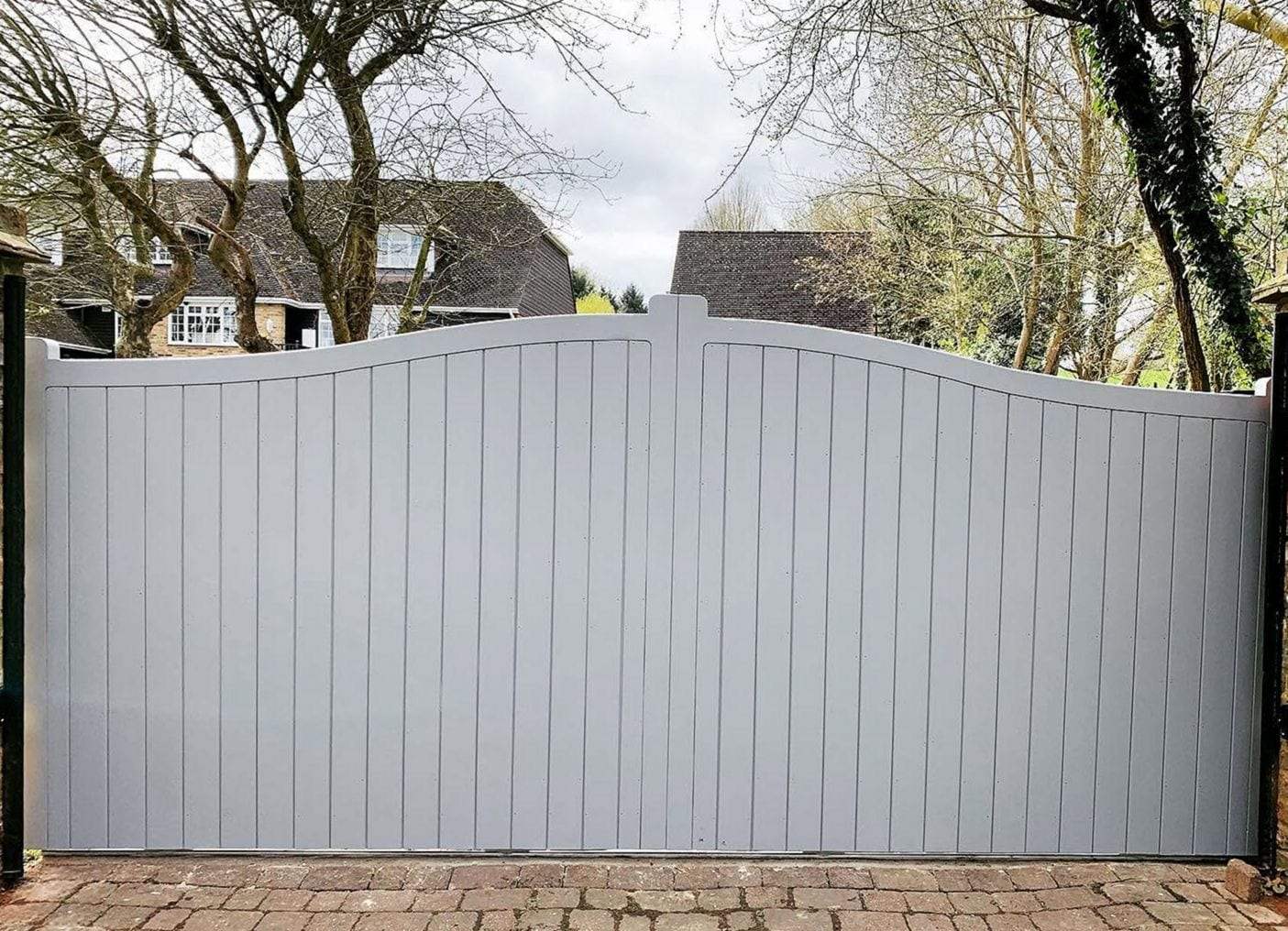
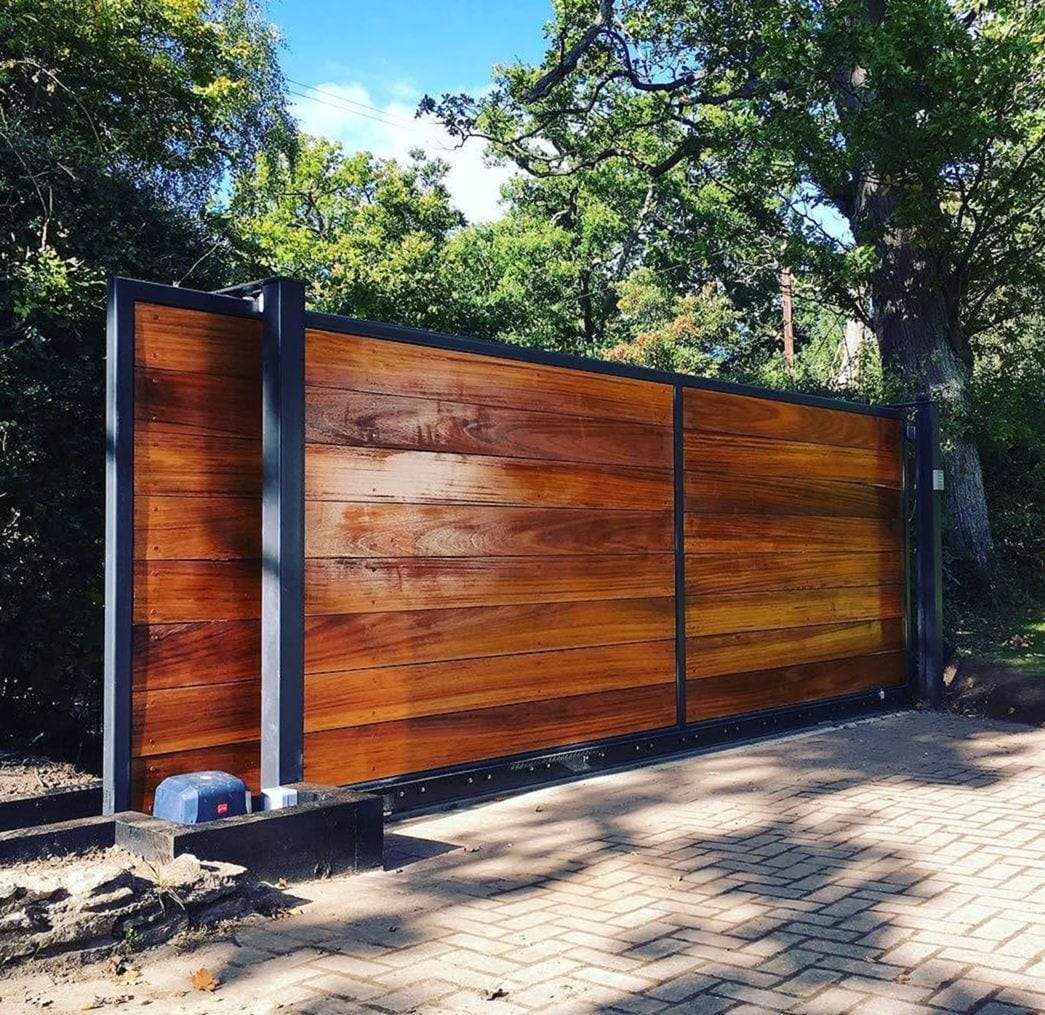
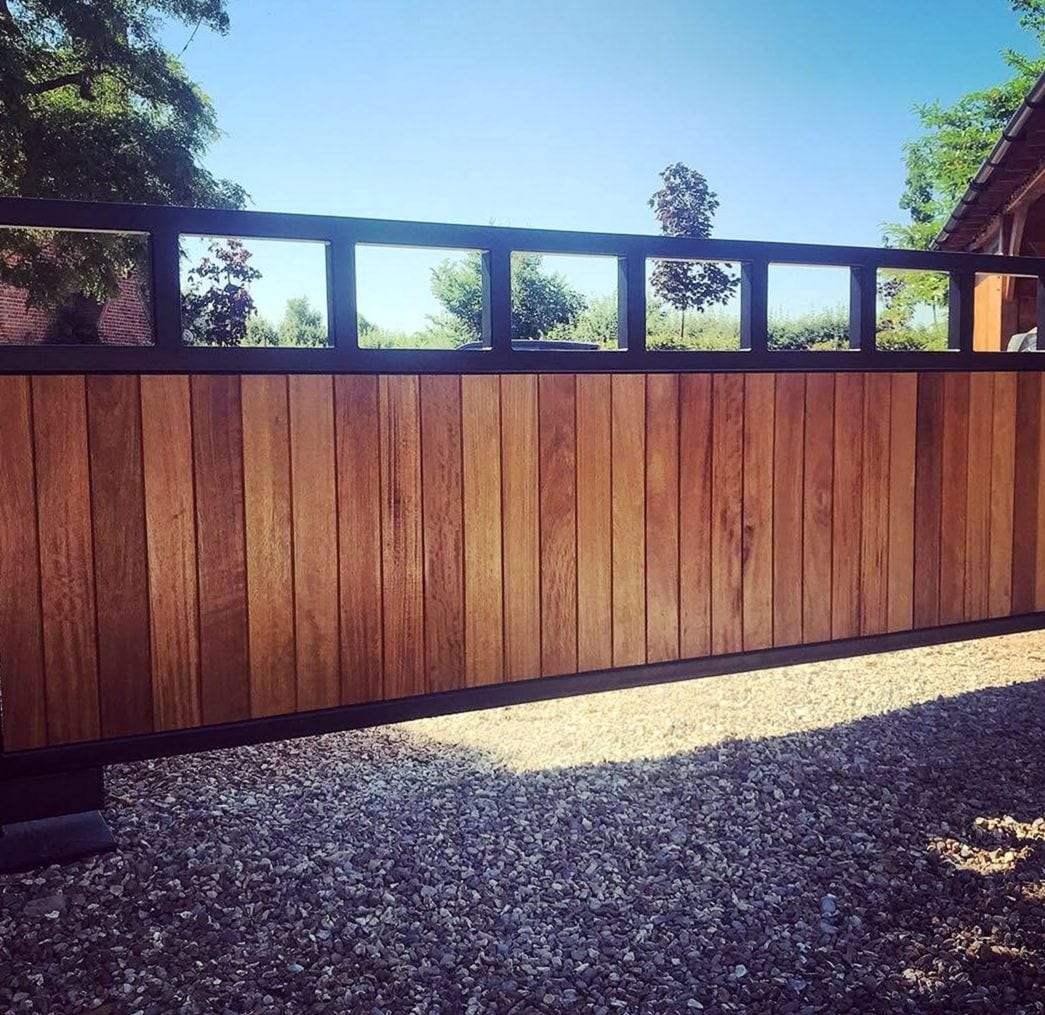
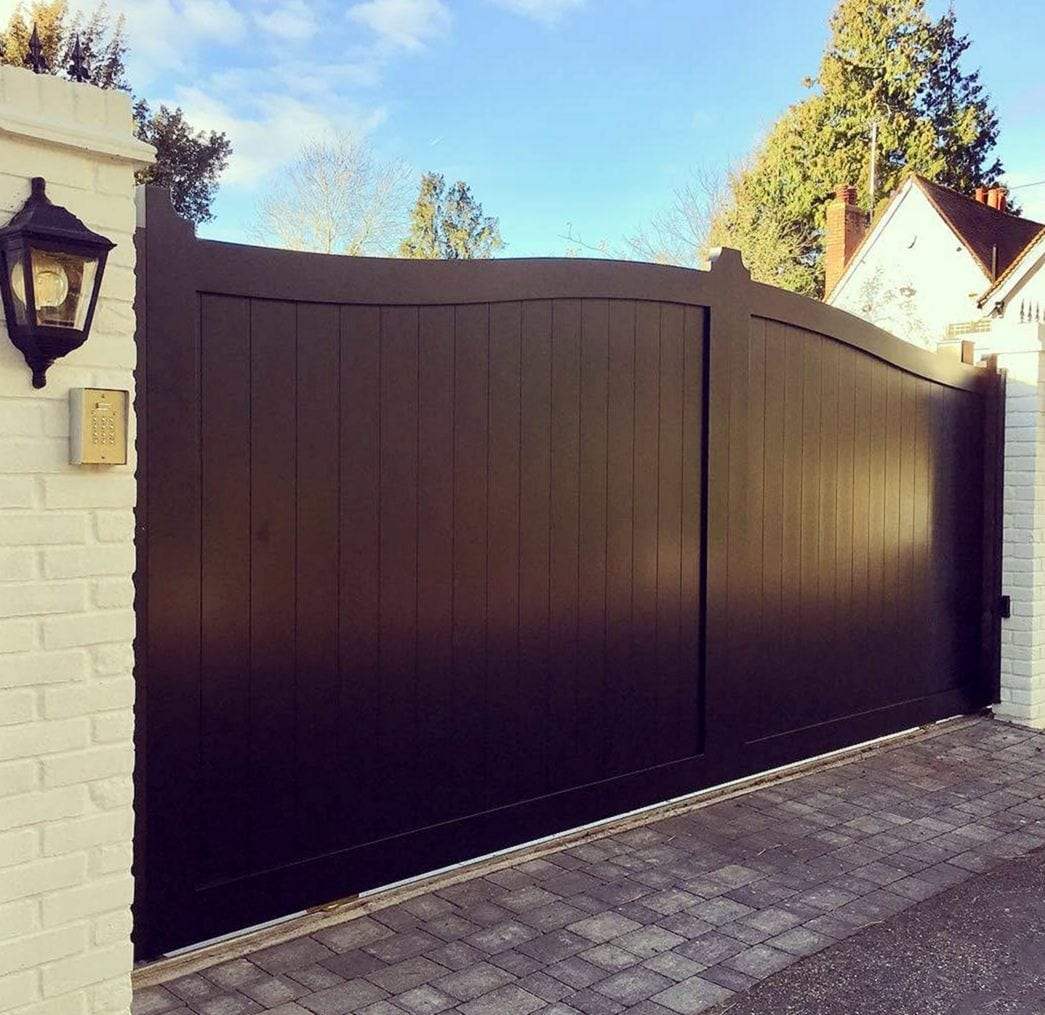
Swing and slide gates in hardwood, painted timber and metal. A bi-fold gate is not pictured here; it looks like a double swing gate whose leaves fold in half as they open.
Sizing Your Gate
Measure your drive at the spot where the gate posts will stand, then use the guide below. It gives a starting point: the gate type that suits your slope and traffic, the clear opening to aim for, and the room it needs beside the drive.
Gate Sizing Guide
Enter your driveway's width where the gate will stand, how steeply it slopes there, and the largest vehicle that needs to pass.
Your recommendation will appear here.
Rules behind the guide: cars and SUVs pass comfortably through 12 ft, pickups with trailers through 14 ft, RVs and box trucks through 16 ft, and delivery or tractor-trailer traffic needs 20 ft or more. A cantilever slide gate needs roughly one and a half times the opening in clear run beside it.
Gate Types Compared
Typical openings and time on site for each kind of gate. Your own estimate gives the schedule and the price for your gate; these are the usual ranges in the trade.
| Gate type | Best for | Typical opening | Time on site | What drives the cost |
|---|---|---|---|---|
| Single swing | Narrower drives on flat ground; walk-through yard gates | 10–14 ft | Often one day on sound posts; new posts add a wait while the concrete cures | Leaf length and material, post work, and an opener if wanted |
| Double swing | Classic estate look on wider, level drives | 12–20 ft | A day or two: two hinge posts and a center stop to set and align | Two leaves and hinges, two posts, one opener per leaf |
| Track slide | Wide, level drives with room beside the opening | 12–30 ft | Commonly two visits, because the track sits on a concrete base that must cure | Track and its base, guide posts, a slide operator |
| Cantilever slide | Sloped or uneven drives, heavy traffic, snow-prone sites | 12–40 ft | The longest: footings for the carriages, then hanging and leveling | Extra gate length for the counterbalance, carriages and footings |
| Bi-fold | Short drives where a car must stop close to the gate | 10–20 ft | Similar to a double swing, plus setting the fold hinges | Fold hardware and an opener made for bi-fold leaves |
| Walk gate | Pedestrian entry beside a drive gate, and yards | 3–5 ft | Usually a few hours on existing posts | Latch and lock choice, self-closing hinges |
From Estimate to Finished Gate
- Site visit. We measure the opening, check the slope, the soil, drainage and where power can come from.
- Choices and price. We go over gate type, material and automation, then give you the price before any work starts.
- Utilities and permits. PA One Call marks buried lines; your municipality's permit is filed where one is needed.
- Posts and footings. Set plumb and deep enough for frost, then left to cure.
- Hanging and adjusting. The gate is hung, leveled and set against its stops so it closes without forcing.
- Automation. Opener, safety sensors and controls are installed and tested, if the gate is automatic.
- Walkthrough. We show you how it all works, including the manual release.
Installation Questions
How long does installation take?
It depends mostly on the posts and footings. A gate hung on sound existing posts can often be done in a day. New posts set in concrete, a track base or cantilever footings need time to cure before a heavy gate is hung, so those jobs usually take two visits. Wiring an opener, a keypad or an intercom adds time on site. Your estimate lists what the job needs and how we will schedule it.
Do I need a permit?
Often, yes. In York County each municipality sets its own rules: the City of York, the boroughs and the townships. Many require a zoning permit for a fence or gate, limit how tall a fence may be in a front yard, and want gates kept clear of the road and the sidewalk. Wiring a new opener can also need an electrical permit and inspection. We tell you what your municipality asks for when we go over the job, and your HOA, if you have one, may have its own approval step.
Can you match my existing fence?
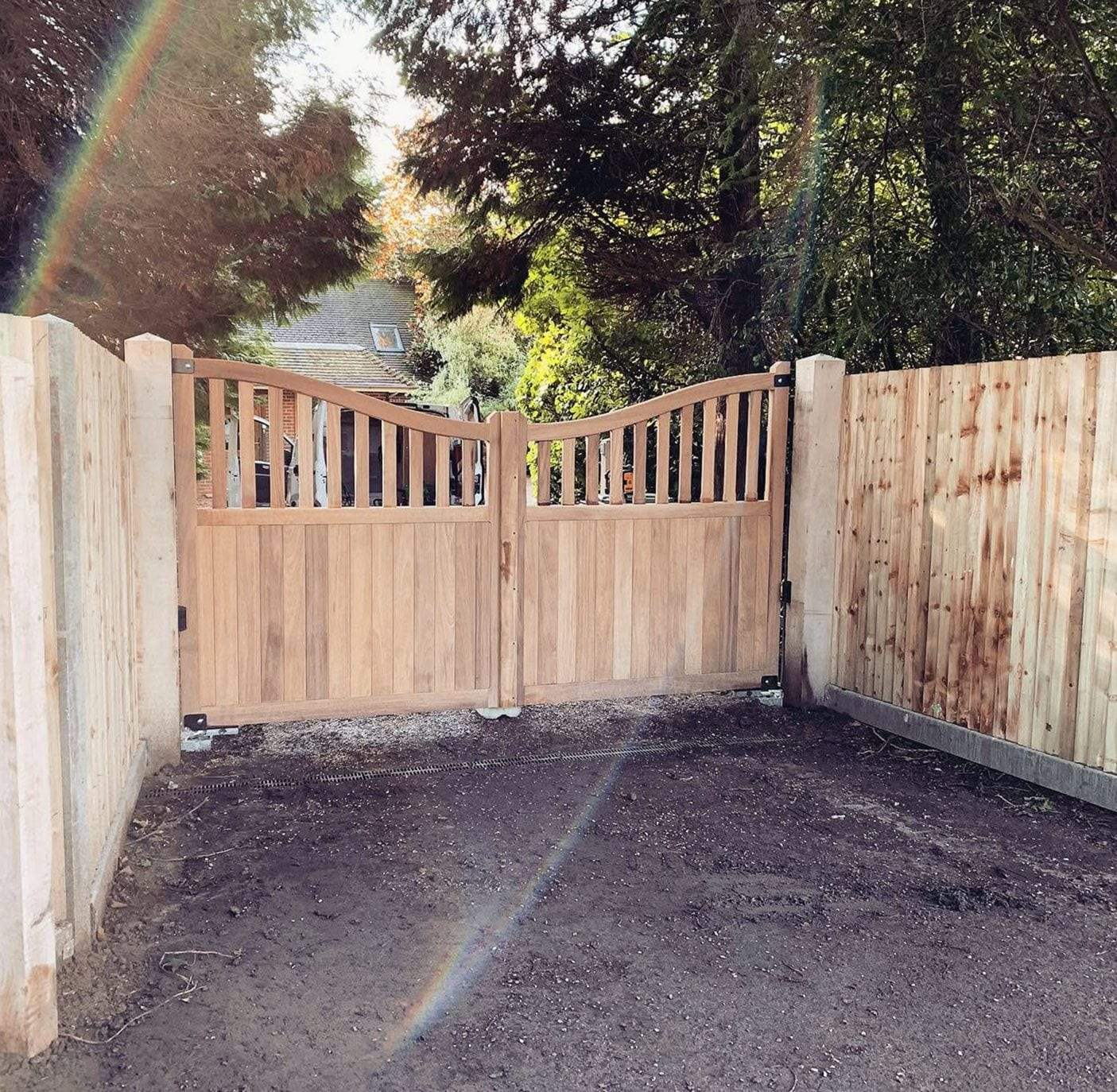
Usually. Bring us a photo or let us look at the fence on the first visit. Picket spacing, top style, rail height and color can be matched closely in steel and aluminum; with wood, a new gate will look brighter than an older fence until the new boards weather or are stained to match. The materials page covers matching in more detail.